
Rubber Operating Temperature Range Chart
When Operating Temperature Exceeds Material Limits, Every Seal Becomes a Time Bomb
A Complete Temperature Range Reference for 14 Rubber Materials — Dual-Range Comparison of Standard and Specialty Compounds, from −100°C Extreme Low to 250°C High
Temperature is the leading cause of seal failure. Hardening from overheating, brittle fracture in the cold, loss of elasticity — all of it starts with the wrong material choice. NIYOK has compiled the standard operating temperature ranges and specialty compound achievable limits for 14 common sealing materials, presented as a dual-color comparison, so engineers can clearly see the upper and lower limits of each material before locking in specifications — no guesswork, just data-driven selection.
Temperature First: Complete Operating Temperature Comparison for 14 Rubber Sealing Materials
If the temperature range doesn't match, no other material property will save you — mismatched temperature conditions are one of the most common root causes of seal failure.
Standard rubber compounds are each designed with a defined operating temperature range. But real-world conditions rarely follow the spec sheet: elevated cavity temperatures in aging equipment, cold-shock from seasonal transitions, or abnormal temperature spikes caused by non-standard media under specific conditions can all push an otherwise compliant material past its limits — triggering premature failure at the boundary.
This is precisely why specialty compounds exist. Through selection of polymer base materials, adjustment of reinforcing filler ratios, vulcanization system design, and the incorporation of heat- or cold-resistance additives, NIYOK can develop customized rubber formulations tailored to a customer's actual operating conditions — extending a material's usable temperature range toward the high or low end, expanding application flexibility and reducing material selection risk without switching to a different base material.
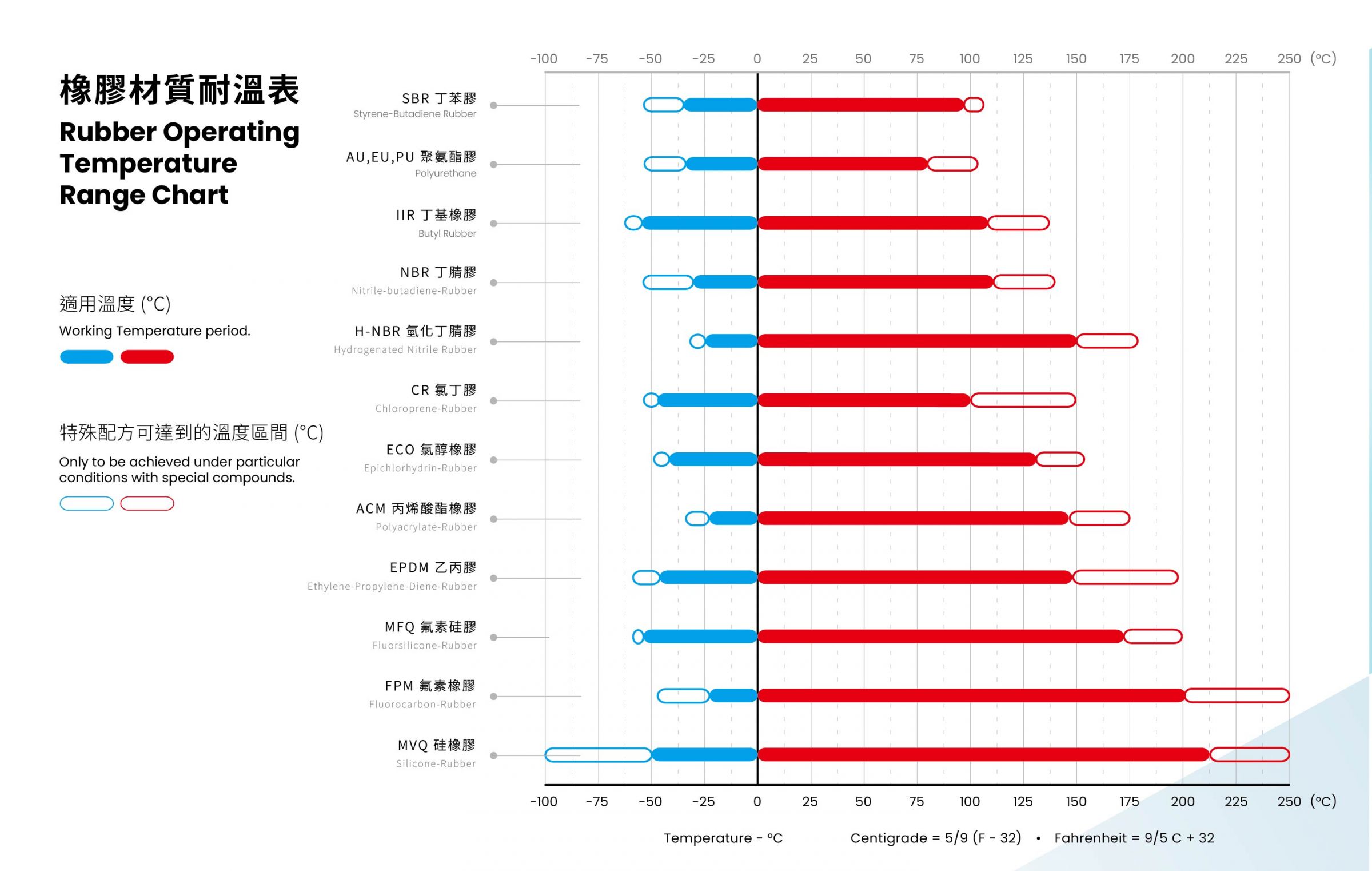
In the chart, the dual-color comparison illustrates this directly: solid-filled ranges represent the standard compound's operating window, while outlined ranges show the extended coverage achievable through specialty formulations. The gap between the two is the headroom that compounding technology creates — allowing projects operating near critical temperature thresholds to first evaluate formulation optimization before committing to a higher-cost alternative material.
NIYOK has compiled standard and specialty compound temperature data for 14 materials — SBR, AU/EU/PU, IIR, NBR, HNBR, CR, ECO, ACM, EPDM, MFQ, FPM, MVQ, and others — covering a range from −100°C to 250°C. This reference helps engineers understand the flexibility window of each material at the earliest stage of selection, and serves as a shared baseline for subsequent compounding development discussions.
Whether for O-rings, oil seals, gaskets, or custom rubber components, NIYOK provides material evaluation and compounding recommendations — helping customers find the right balance between standard and specialty formulations, and make well-informed decisions across reliability, cost, and development timeline.
Can't find a specification that fits your requirements? Contact NIYOK for a customized sealing solution.
- Download
rubber-operating-temperature-range-chart
Please download the latestrubber-operating-temperature-range-chart as follows. Our technical sales team has rich experience and technical expertise in O-rings...
Download