Why Are Seals So Critical in EV Charging Equipment?
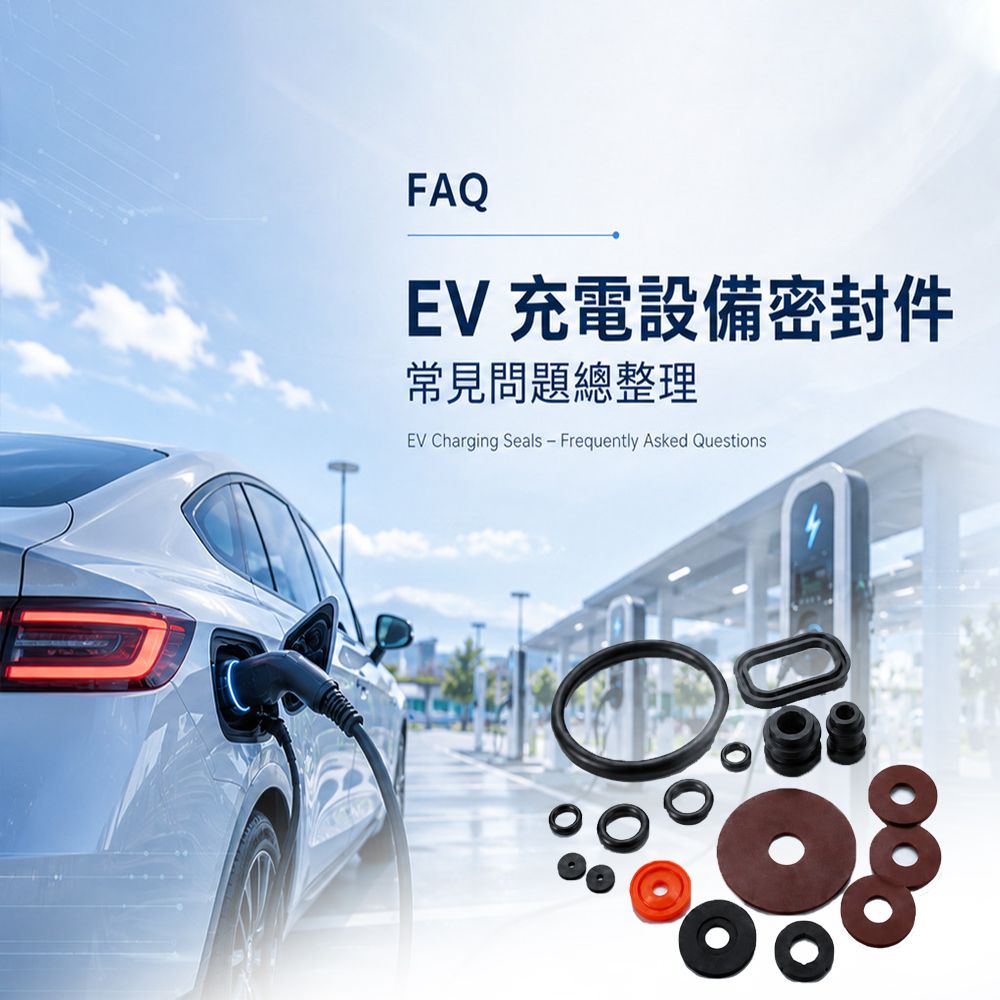
NIYOK is a rubber seal manufacturer with over 40 years of expertise in automotive and motorcycle sealing applications, experience we now extend to EV charging infrastructure, serving multiple charging equipment customers. Our product range covers charging connector O-rings, charging gun boots, and custom molded seals for control enclosures, all backed by dual IATF 16949 and ISO 9001 certification.
According to the International Energy Agency's (IEA) Global EV Outlook 2024, global electric vehicle (EV) sales approached 14 million units in 2023, while public charging points neared 4 million, representing growth of more than 40% over 2022. The IEA projects that global public charging points will more than quadruple by 2030. Charging equipment manufacturers now face unprecedented pressure to scale production volume and quality simultaneously.
Critical interfaces such as charging connectors and charging gun boots are continuously exposed to outdoor UV radiation, rain, dust, thermal cycling from −40°C to +85°C, and dozens of plug-in/pull-out operations every day. When a seal fails, the consequences range from protective equipment shutdowns to arcing, short circuits, or electrical leakage safety incidents. Seal material selection and validation specifications directly determine the field reliability and total lifecycle cost of charging equipment.
Q1. What are the most common causes of seal failure in EV charging equipment?
The following three root causes are the most common, and they are typically discovered only after mass production begins, leading to large-scale rework or field failures. This is precisely the scenario procurement and R&D teams least want to face late in a project:
1. Incorrect material selection: rubber materials not specified for outdoor weathering, ozone, and UV resistance. General-purpose rubbers with non-weather-resistant formulations, such as NBR or SBR, may crack, chalk, or harden after prolonged outdoor exposure, losing their sealing capability. For outdoor applications, weather-resistant materials such as EPDM, VMQ, or FKM are generally recommended.
2. Excessive compression set: after long-term compressive loading and thermal cycling, the seal loses its elastic recovery, and micro-gaps form at the interface, resulting in degraded IP protection ratings or moisture ingress. (For the applicable test standards and acceptance criteria, see the "Key Pre-Production Validation Tests" section below.)
3. Improper dimensional tolerance fit: when seal cross-section dimensions, compression ratio, and groove design are not evaluated as an integrated system, the result can be localized stress concentration, insufficient sealing pressure, or seal displacement during plug-in/pull-out cycles.
All three categories of failure can be eliminated before mass production through material specification review, prototype compression testing, and joint interface tolerance verification. NIYOK provides material selection evaluation and prototype testing services, with a standard sampling lead time of approximately 7 working days (actual timelines depend on project requirements). Compression set reports can be issued at the sample stage for engineering confirmation.
Q2. What key validation tests must EV charging equipment seals pass before mass production?
Before entering mass production, seals for EV charging equipment typically need to complete the following five core validation tests to ensure field reliability and support system-level CE, UL, or GB/T certification:
1. IP protection rating testing (IEC 60529): charging connector interfaces and enclosure seals typically need to achieve IP54 (dust-protected, splash-resistant) to IP67 (protected against temporary immersion), with some outdoor charging station specifications requiring IP66 or higher.
2. Mating cycle endurance testing: per the IEC 62196-1 charging connector standard, simulating plug-in/pull-out operations over the product's expected service life. The prevailing industry requirement is 10,000 cycles or more with no cracking, no permanent deformation, and full retention of sealing function.
3. Temperature cycling testing (IEC 60068-2-14): under alternating conditions from −40°C to +85°C, verifying that seals show no delamination, cracking, or warping under thermal shock, and that sealing interface integrity remains unaffected.
4. Compression set testing (ASTM D395 Method B / ISO 815): simulating long-term compressed conditions to evaluate whether elastic recovery meets minimum sealing pressure requirements, typically specified as Compression Set ≤ 25%. This is the quantitative acceptance criterion for the "excessive compression set" failure mode described above: once compression set exceeds the limit (i.e., insufficient elastic recovery), the interface can no longer maintain stable sealing pressure.
5. Weathering and aging testing (ASTM G154 / ISO 4892): simulating outdoor UV exposure (UV-A 340 nm) and ozone exposure to verify that the material surface shows no cracking, chalking, or tackiness, serving as a reference for long-term outdoor weathering performance.
NIYOK holds dual IATF 16949 and ISO 9001 quality certifications and can provide complete test planning recommendations based on customer requirements, issue 8D problem analysis reports and CAPA corrective action documentation, and supply the component test documents and quality records needed for system-level certification.
Practical information procurement teams often ask about, such as minimum order quantity (MOQ), mass production lead times, and low-volume sampling arrangements, can all be flexibly accommodated based on actual project requirements and specifications. Please contact the NIYOK technical team to discuss.
Additional test data and reports
Q3. What sealing products does NIYOK offer for EV charging equipment?
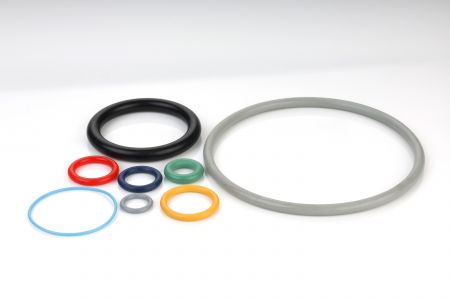
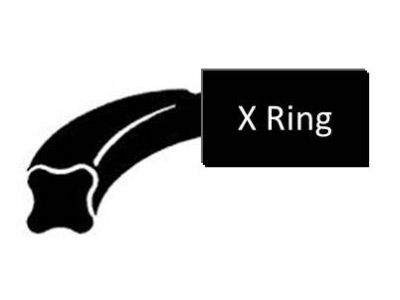
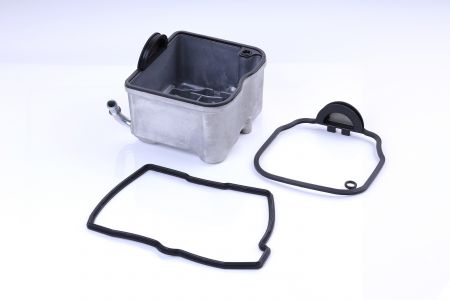
NIYOK supplies O-rings, X-rings, gaskets, and custom rubber components, available for co-development based on the waterproofing and dust protection requirements of your EV charging equipment, with full support from material selection and prototyping through to mass production.
If you are evaluating sealing solutions for EV charging infrastructure, contact NIYOK. We will provide material selection and design recommendations based on your application conditions.
- Related Products
-
Shake-proof Gasket
Shake-proof Gaskets from NIYOK are available in the most common sizes and types for motorcycles,...
Details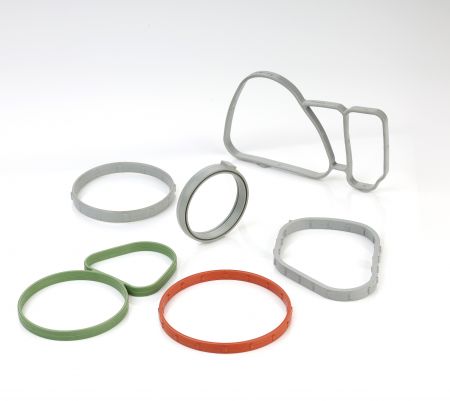
Automobile Gaskets
Automotive gaskets have reliable performance and quality, and can be used on cylinder gaskets,...
Details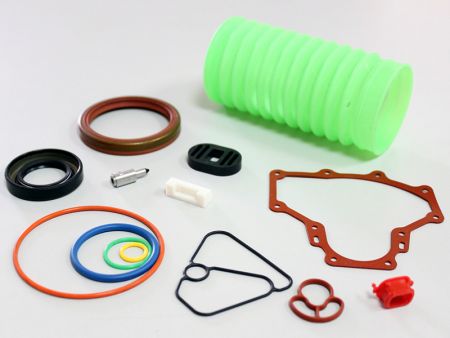
Custom Rubber Parts
Customized Rubber Parts developed by achieving the standard tolerances and the application...
Details
Custom Bushing
The custom bushings with lower costs and lighter weights ensure the alignment of components....
Details