
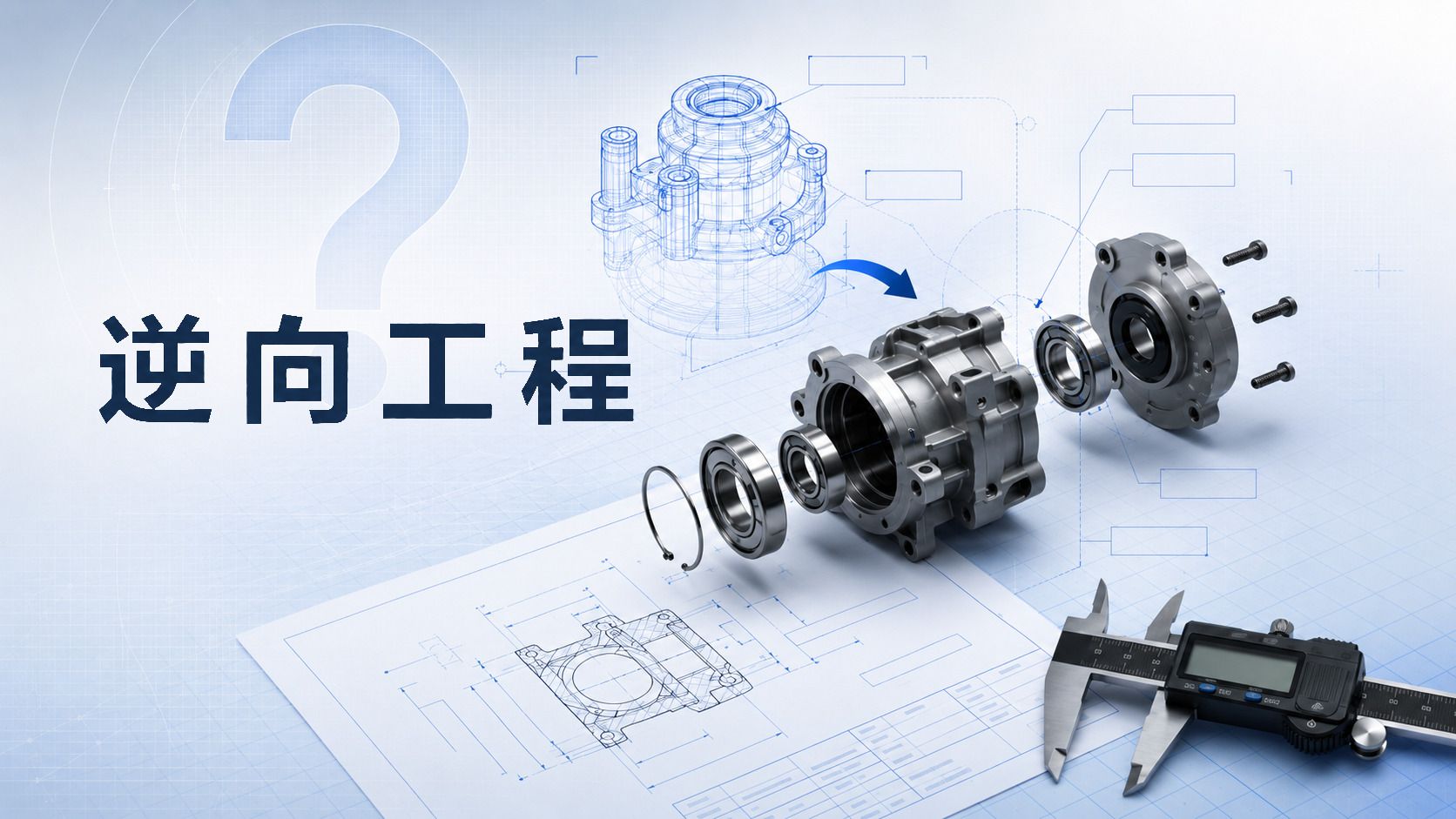
Discontinued Part, Missing Drawing, Worn-Out Seal — Can a Replacement Still Be Made?
Yes. As long as you have the original part, a sample, or partial dimensional data, NIYOK can support a reverse engineering assessment — covering measurement, modeling, material analysis, mold development, and volume production, all handled in-house.
These situations are more common than you might expect: original part numbers discontinued, equipment suppliers out of business, drawings too old to locate, import lead times too long. When this happens, reverse engineering is often the most practical path forward.
Over four decades, NIYOK's engineering team has helped countless manufacturing customers successfully reproduce seals that had gone out of production, lost their drawings, or failed due to wear — across a wide range of applications including machine tools, hydraulic equipment, industrial machinery, and vehicle drivetrain systems. Starting from a single worn part, through measurement, modeling, material confirmation, mold development, and mass production, the average development cycle is significantly shorter than sourcing a new overseas alternative.
Have an existing part? Reverse engineering can start right away.
Q1. What is seal reverse engineering? Is it the same as copying an old part?
No — and the difference is critical.
The problem with simply copying an old part is that oil seals, O-rings, and gaskets degrade with use: wear, swelling, hardening, and compression set are all common. If you only measure the external dimensions of a worn part, you are reproducing a failed state — and the new part will have the same problems.
Reverse engineering treats the old part as a starting point, not a standard. Our engineers evaluate the following in combination:
Current dimensions of the old part and likely degree of deformation
Shaft diameter, bore diameter, or installation groove of the mating components
Compression ratio and contact position of the seal within the assembly
Operating temperature, pressure, rotational speed, and motion type
Contact media, such as oil, water, coolant, gas, chemicals, etc.
Failure mode of the original part, such as leakage, cracking, wear, or insufficient service life
The goal is to translate all of these conditions into actionable development data — not just deliver a part that looks similar.
Q2. What can NIYOK deliver for reverse engineering projects?
With 40 years of sealing manufacturing experience and dual certification under ISO 9001:2015 and IATF 16949:2016, NIYOK is one of the few Taiwan-based seal manufacturers able to take a reverse engineering project all the way from assessment through to mass production. Our support covers the following:
Sample Measurement and Dimensional Reconstruction
If no drawing exists, simply provide the old part or a component removed from the field. Our engineering team assesses the sample condition, interprets its geometry, and cross-references mating component dimensions to establish a sound development baseline — rather than taking the dimensions of a failed part at face value.
3D CAD Modeling
Measurement data is converted into reviewable drawings or models, enabling engineering teams to confirm structural details and dimensional adjustments, and giving procurement teams a basis for tooling and quotation evaluation. For parts with complex cross-sections, lip geometries, bore features, or assembly interference, CAD modeling allows problems to be identified and resolved before development begins.
Material Analysis and Substitute Material Evaluation
Seal failures are not always dimensional. The original material may be inadequate in temperature resistance, oil resistance, chemical compatibility, hardness, or elasticity for the application. If original material specifications are unavailable, NIYOK can assess based on sample condition and operating environment — and perform spectrometric material analysis where required.
Mold Design and Trial Runs
Once dimensions and material are confirmed, NIYOK moves directly into mold design and trial run evaluation — no outsourcing required. Mold design accounts for dimensional stability, parting line placement, flash control, and downstream production feasibility.
Quality System Support for Volume Production
For reverse-engineered parts requiring long-term stable supply, NIYOK's ISO 9001:2015 and IATF 16949:2016 quality systems provide complete incoming material inspection, in-process control, outgoing inspection, and lot traceability — ensuring consistent quality across every batch.
Q3. Which types of seals are suitable for reverse engineering?
Oil Seals
Commonly found around rotating shafts, bearings, and lubrication systems. Reverse development requires confirmation of shaft diameter, bore diameter, rotational speed, oil type, and operating temperature. If the original part shows lip wear or leakage, engineers will also review mating component condition and whether the lip design requires revision.
O-Rings / Rubber Rings
Requires confirmation of inner diameter, cross-section diameter, groove dimensions, compression ratio, contact media, and temperature. NIYOK maintains stock of AS568 and JIS B2401 standard sizes and will first evaluate whether a standard replacement is available. If installation space or material requirements cannot be met by a standard part, custom development is the next step.
Sealing Gaskets
Requires confirmation of contact surface, compression amount, fastening method, and contact media. NIYOK can assist with material selection, modeling, and process evaluation based on the specific conditions.
Custom Rubber Components
For parts with complex cross-sections, mounting holes, inserts, or irregular geometry, it is recommended to provide the sample, photographs, an installation description, and details of any failure mode. This allows our engineering team to assess modeling and manufacturing feasibility.
Q4. When is reverse engineering with NIYOK the right choice?
Original part discontinued or difficult to import — dimensional and material data can be reconstructed from the old part to establish an alternative supply source.
No complete drawing or specification document — an old part alone is enough to get started; development conditions are built up progressively from sample measurement.
Equipment wear parts require regular replacement — reverse engineering establishes a stable, long-term supply foundation that reduces procurement uncertainty.
Existing seals are leaking, wearing prematurely, or failing before end of service life — rather than simply copying the part, NIYOK reviews whether material, compression ratio, or lip design needs to be improved.
Market replacement parts are unreliable, with inconsistent quality between batches — custom development establishes clear specifications and inspection standards.
Q5. What information should I prepare before contacting NIYOK for a reverse engineering assessment?
You do not need everything in hand before reaching out — share whatever you have. The more complete the information, the faster the evaluation:
Old part, sample, or existing component, which is the most important item
Component installation location and equipment type
Mating component dimensions, such as shaft diameter, bore diameter, groove dimensions, or installation envelope
Operating temperature, pressure, and rotational speed
Contact media, such as oil, water, coolant, gas, chemicals, etc.
Original failure mode, such as leakage, cracking, swelling, wear, etc.
Estimated demand volume and whether volume production is required
Even if all you have is the old part and a note saying "this is leaking and the original supplier no longer makes it," we can begin a preliminary assessment.
Q6. What does the reverse engineering process look like?
1. Requirements Confirmation — describe the part function, current issue, and approximate quantity required
2. Sample or Old Part Submission — physical parts or photographs can both serve as a starting point for discussion
3. Measurement and Structural Analysis — confirm dimensional baseline, seal type, and probable failure cause
4. Material and Manufacturing Method Evaluation — confirm rubber material, hardness, and structural approach based on operating conditions
5. 3D CAD Modeling and Tooling Evaluation — convert to a developable drawing; assess mold design and trial run approach
6. Quotation and Timeline Discussion — present a specific proposal based on complexity, tooling requirements, and volume
7. Sample Confirmation and Production Ramp-Up — conduct dimensional, assembly, and functional testing on completed samples before moving to volume production
Q7. What should engineering and procurement teams each keep in mind?
For Engineers
Key questions to confirm: Are the sample measurements reliable? Is the material appropriate for the current operating conditions? Has the original part had known failure issues? Does the design need to be revised rather than simply replicated?
For Procurement
Key questions to align on in parallel:
Is tooling required? How is tooling cost structured?
Can prototypes be ordered before committing to volume production?
Are there minimum order quantity requirements?
Can stable long-term supply be maintained? Is quality consistent between batches?
Are inspection reports and lot traceability documentation available?
Can a standard part serve as a replacement, or is custom development required?
The ultimate goal of reverse engineering is not simply to obtain a similar-looking part — it is to establish a sealing supply condition that is repeatable, inspectable, and fully traceable.
Have an Old Part or a Discontinued Component? Contact NIYOK for a Free Initial Assessment.
No complete drawing required. No quantity commitment needed. Send us the sample or a photograph, and NIYOK's engineering team will provide a free preliminary evaluation.
From measurement and 3D modeling to material assessment, mold development, and volume production — 40 years of manufacturing experience, ISO 9001:2015 and IATF 16949:2016 dual certification, 100% made in Taiwan.
If you have the old part, reverse engineering can begin — let NIYOK turn a discontinued part into a solved problem.
- Related Products
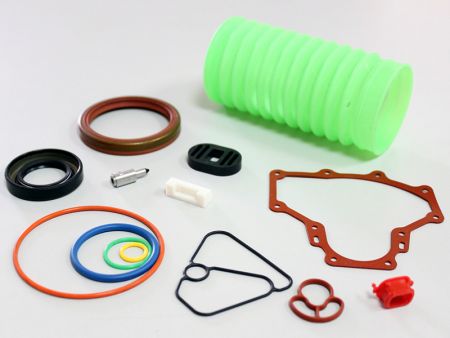
Custom Rubber Parts
Customized Rubber Parts developed by achieving the standard tolerances and the application...
Details