
Project Managers: 5 Hidden Seal Project Risks
Project Managers and Field Engineers: 5 Critical Questions on Seal Development and Replacement
Seal component project failures most commonly occur at two critical moments: initial sampling failure on the first try, and field leakage discovered only after production ramp-up.
Both problems have early warning signs and can be prevented during the project planning phase. Here are NIYOK's 5 most frequently asked questions from project managers and field engineers — helping you make better decisions at every project stage.
Q1. How do I reduce the chance of initial sampling failure?
The key is complete information during the planning phase, not multiple sampling iterations.
Many seal sampling failures are not manufacturing problems at all, but rather incomplete requirement information that leads to wrong material or structural direction — wasting 4–8 weeks of sampling cycle for nothing.
To improve first-time sampling success, we recommend preparing these three things before formal order placement:
First: Complete Operating Condition Description
Not just temperature and pressure numbers, but also: Is it a static or dynamic seal? Any rotational or reciprocating motion? Is the contact media corrosive? Any installation space restrictions?
Second: Drawings and Acceptance Criteria
A dimensional drawing is ideal; if not available, hand sketches or a physical sample work. Acceptance criteria ensure both sides have a shared definition of "qualified" and avoid disputes later.
Third: Involve the Supplier in Early DFMEA and Material Pre-Selection
NIYOK has CAD/CAE analysis, FMEA evaluation, and trial assembly verification capabilities — before sampling begins, we can help assess potential failure modes and confirm material feasibility at minimal cost. This step often intercepts the biggest risks at the lowest cost stage.
Q2. Can you support field rush orders or anomaly analysis?
Yes. NIYOK can respond quickly to complaints and, when necessary, visit customer sites for on-site investigation.
For production lines with high downtime costs, seal failure isn't a quality issue — it's a financial emergency losing money every hour.
NIYOK's anomaly response process:
Quick Assessment: Upon receiving an anomaly report, we prioritize evaluating problem severity and impact scope
Emergency Sourcing: For standard materials, we can expedite inventory coordination or compress manufacturing schedule
On-Site Support: Complex failure cases warrant dispatch to the customer facility to help determine if the issue is seal defect, installation error, or operating condition design
Root Cause Report: After site investigation, we provide a complete anomaly analysis and improvement recommendations
During supplier qualification, we recommend asking suppliers to specify their Response SLA (Service Level Agreement for response time) — including initial response timeline, material support mechanism, and feasibility conditions for on-site visits. This is the most direct way to assess a supplier's emergency capability.
Q3. What basic information should I prepare before sending an RFQ?
The more complete the data, the more accurate the quotation, and the shorter the sampling cycle.
Essential information list for NIYOK to process RFQs:
Application description: What equipment and where will the seal be used
Material requirements: Any specified material, or describe the contact media for our recommendation
Hardness requirements: Shore A or other hardness specification
Dimensions and tolerances: ID, OD, cross-section size — drawings preferred
Drawings: DXF, STEP, PDF, or hand sketches all work
Contact media: Oil, water, gas, chemicals, food, etc.
Temperature range: Normal operating and peak temperature
Pressure range: Normal working pressure and maximum pressure
Quantity needed: Sampling quantity and estimated annual volume
This checklist also works as an internal requirement confirmation Checklist, ensuring no information gaps during cross-departmental communication — so your RFQ doesn't come back for missing data, significantly shortening the front-end confirmation timeline.
Q4. What's most commonly overlooked in seal projects?
The gap between structural tolerance and actual operating conditions is the most common leakage root cause.
Many seal projects select the right material and stay within pressure and temperature specs, yet still leak. The problem often lies here:
Tolerance & Fit are Underestimated
Design tolerances look reasonable on paper, but when you add actual manufacturing tolerance, installation tolerance, and thermal expansion, the groove dimension and seal's actual fit state can be completely different. In high-pressure or dynamic applications, this gap directly impacts sealing effectiveness.
Design, Verification, and Production Aren't Planned Together
Many projects complete design first, then think about verification — only to discover during verification that production process can't replicate the design. The correct approach is to consider verification methods and manufacturing process constraints during the design phase, so all three stages' requirements are considered together.
NIYOK recommends involving engineers early to evaluate operating conditions, structural design, and material characteristics together — rather than finding a seal match after design is complete.
Q5. Can you help with replacement parts for aging equipment?
Yes. Reverse engineering and composite fabrication are NIYOK's core strengths in the replacement parts market.
Replacing seals in aging equipment is one of the most painful problems field engineers face:
Original manufacturer has ceased production — drawings unavailable
No matching standard components on the market
Original supplier has closed or is unreachable
NIYOK's Solution: Reverse Engineering
If you can provide the old seal component, NIYOK engineers can:
Precision Measurement: Use CMM (Coordinate Measuring Machine) to recover exact dimensions
Material Analysis: Identify original material type and hardness
Drawing Reconstruction: Build manufacturing specification drawings from measurement results
Sample Verification: Produce replacement and confirm assembly compatibility
Combined with composite fabrication capabilities (metal skeleton, PTFE, fabric reinforcement, and other composite structures), NIYOK can replicate most discontinued composite seal components on the market — especially suitable for:
Regular Wear Parts stock rotation
NLA (No Longer Available) Parts emergency replacement
Aging production equipment seal retrofit programs
If you have old seal components to evaluate, we welcome direct sample shipment. We provide free preliminary assessment, confirming feasibility and estimated timeline for reproduction.
Moving Forward on a Seal Project?
Whether it's a new development or aging equipment replacement, NIYOK can start with technical discussion and help you reduce risk before sampling even begins.
Ready to discuss your seal project with NIYOK?
- Related Products
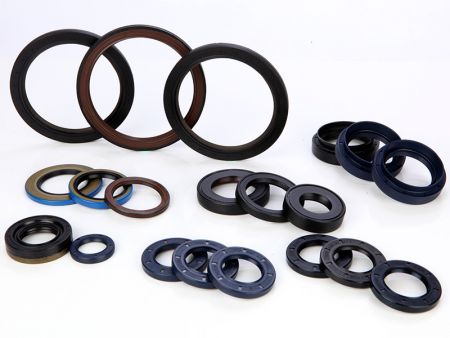
Transmission Seal
Transmission seals for the application level and vehicle types of automatic transmissions are increasing...
Details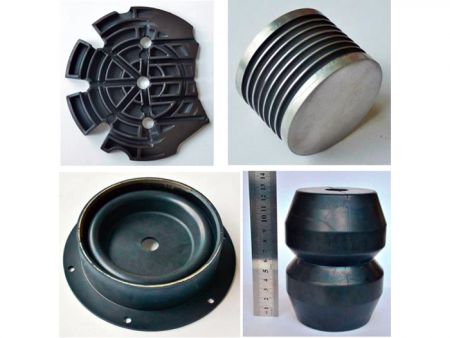
Waterproof Custom Rubber Parts
Custom Molded Waterproof rubber parts could be mold sheets or pads of custom formulated rubber...
Details