
SQE Seal Supplier Audit Checklist: 5 Key Focus Areas
Before Evaluating NIYOK as a Seal Supplier: 5 Key Capabilities Quality Engineers and SQEs Should Know
Supplier audits aren't just a process — for quality engineers and SQEs, every question maps to a potential risk point. Seals may be small, but once quality control fails, they're often the first thing to go wrong in a production line or entire system.
Here are NIYOK's 5 most commonly received questions from quality, compliance, and SQE functions — with detailed explanations of our actual capabilities and how we address them.
Q1. What inspection equipment do you have to support dimensional measurement and durability verification?
A concrete equipment list carries far more weight than simply saying "strict quality control."
NIYOK currently operates the following primary inspection equipment:
| Equipment Name | Application |
| CMM (Coordinate Measuring Machine) | High-precision dimensional measurement for seals with complex geometry |
| Rheometer | Measures rubber material viscoelasticity, vulcanization characteristics, and flow behavior |
| Tensile Tester | Verifies material tensile strength, elongation, and tear resistance |
| Microscope | Surface defect observation, cross-section analysis, and foreign material detection |
| Oil Seal Endurance Tester | Long-term dynamic durability verification simulating actual operating conditions |
These equipment cover the core dimensions of seal quality verification: dimensional accuracy, material characteristics, cosmetic defects, and dynamic durability — supporting incoming inspection, process control, and final pre-shipment inspection phases.
Upon request, we can provide calibration records and measurement system analysis (MSA) reports for each equipment.
Q2. Do you have a complete batch traceability system?
Yes. NIYOK's traceability system covers the complete chain from raw material intake to finished product shipment.
Our traceability framework includes the following levels:
1. Raw Material Traceability: Every batch of raw material has an intake batch number, supplier CoC, and IQC inspection records
2. Process Traceability: Mold batches, vulcanization conditions, and process parameters are all documented, traceable to specific production dates and shifts
3. Finished Product Traceability: Shipment batch numbers correspond to complete FQC reports and packing records
4. Field Product Traceability: If a quality issue occurs at customer end, we can trace the product batch back to raw material batch and process data
The purpose of this system is to ensure rapid scope definition when quality issues occur, precise root cause identification, and avoid either mass scrap or complete blindness to the problem.
If your company requires suppliers to provide a batch traceability process flow chart or traceability system documentation for supplier audit purposes, please let us know directly — we can prepare these materials in advance.
Q3. What is your complaint handling process if a quality issue occurs?
NIYOK's complaint handling principle: fast response, on-site support when necessary, systematic root cause analysis.
Our standard complaint handling flow:
Step 1: Fast Response
Upon receiving a complaint, we prioritize confirming the problem scope and communicating initial response measures and timeline — avoiding information gaps where customers are left waiting.
Step 2: On-Site Support (As Needed)
For major or complex quality issues, NIYOK can dispatch personnel to the customer site for on-site investigation and sampling, ensuring problem assessment accuracy.
Step 3: CAPA (Corrective and Preventive Action)
Based on problem analysis, we provide a complete CAPA report including root cause, immediate countermeasures, and long-term improvements.
Recommendation for SQEs: During supplier qualification review, we recommend requiring suppliers to address the following three points to assess complaint handling maturity:
1. 8D Reports: Do you have a standardized eight-step problem-solving format?
2. Response SLA: What are your timelines for initial response and CAPA submission?
3. Point of Contact: Is there a clear quality contact, or do we need to re-engage each time?
NIYOK can provide documentation on all three points — please notify us of your requirements before your audit.
Q4. Can you comply with EU's new supply chain data requirements? (DPP, PFAS, etc.)
This is a critical compliance gap that procurement should address now. We're actively preparing for it.
In recent years, the EU's supply chain transparency requirements have escalated significantly:
DPP (Digital Product Passport): Manufacturers must provide digitized data on product lifecycle, material composition, and carbon footprint — gradually expanding in scope
PFAS Restrictions: EU REACH regulations continue tightening restrictions on per- and polyfluoroalkyl substances (PFAS). Seals commonly use PTFE / Teflon materials that may require disclosure or alternative solutions in certain applications
NIYOK is currently evaluating and progressively establishing corresponding data processes, including:
1. Raw material composition declaration (Material Declaration)
2. SVHC (Substances of Very High Concern) content confirmation
3. Supplier carbon data collection mechanism
If your procurement scope includes EU markets, or your customers have explicit compliance requirements, we recommend specifying these in your inquiry — we can prioritize confirming and preparing the documents you need. This is an area we're actively strengthening in our service offerings.
Q5. Do you provide Clean / Vacuum test data for semiconductor applications?
This is a mandatory requirement for semiconductor equipment customers — we're systematizing this data.
NIYOK currently has product development underway for semiconductor applications, including Slit Valve Seals, which have strict requirements for:
Low Outgassing: Material off-gassing in vacuum environments must be minimal to avoid contaminating process chambers
Cleanliness (Particle Count): Surface particle counts must comply with semiconductor process specifications
Chemical Resistance: Must withstand various etchants and cleaning solutions used in the process
NIYOK is currently building systematic Clean / Vacuum test data summaries, including:
1. Vacuum compatibility test results
2. Outgassing rate measurement data (TGA or RGA method)
3. Cleanliness level confirmation documentation
If you're evaluating semiconductor equipment seals, we recommend providing us with your specific process conditions and specification requirements in advance — this allows us to conduct targeted testing for your application rather than provide generic data. Complete Clean / Vacuum test reports are a critical qualification gateway for entering semiconductor equipment supply chains.
Preparing to Conduct a Supplier Audit or Qualification Review?
NIYOK welcomes deep evaluation by quality engineers and SQEs before formal procurement. We can provide:
ISO 9001 / IATF 16949 certification documentation
Inspection equipment list and calibration records
Batch traceability system documentation
Complaint handling procedures and CAPA examples
Factory audit arrangements (including process tour)
If you're planning a supplier audit or need quality documentation, please contact our quality team. We will prepare the specific documents and facility arrangements to meet your evaluation needs.
This document has been compiled by NIYOK SEALING PARTS CO., LTD. Quality Team. Content is continuously updated based on actual capabilities and regulatory developments.
- Related Products
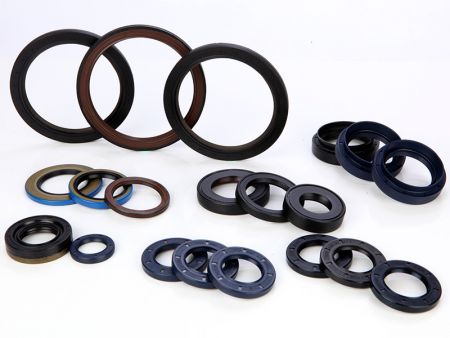
Transmission Seal
Transmission seals for the application level and vehicle types of automatic transmissions are increasing...
Details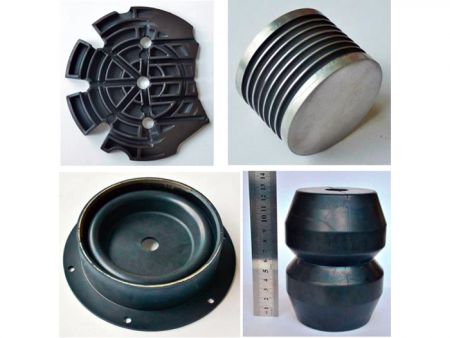
Waterproof Custom Rubber Parts
Custom Molded Waterproof rubber parts could be mold sheets or pads of custom formulated rubber...
Details