
Procurement Guide: Seal Supplier Assessment Q&A
Before Sourcing Seals: NIYOK's 5 Most Frequently Asked Supplier Evaluation Questions
Under supply chain pressure, procurement decisions are often oversimplified to "choose whoever quotes lowest." But for critical components like seals, this logic can easily saddle you with hidden costs many times higher than the price difference.
Here are NIYOK's 5 most commonly received questions from procurement and commodity buyers — designed to help you build a more complete supplier evaluation framework.
Q1. Why shouldn't I just select the lowest-price seal supplier?
Because the cost of seal failure far exceeds any unit price difference.
Many procurement teams compare only unit price, overlooking the cascade of costs a seal failure can trigger:
Rework costs: Labor and parts for disassembly, replacement, and retest
Production line downtime: Hourly losses when operations halt due to seal failure
After-sales costs: Customer complaints, warranty service, and brand reputation damage
For high-risk applications (high pressure, high temperature, chemical corrosion, food/medical), focus on three key supplier evaluation criteria:
1. Quality system: ISO certification, incoming quality control (IQC), process control records?
2. Testing capability: Pressure testing, dimensional measurement, material verification equipment?
3. On-time delivery track record: Proven history of stable, predictable delivery?
NIYOK maintains comprehensive quality controls and testing capabilities, and can provide relevant quality documentation for your review.
Q2. How do I evaluate a seal supplier's lead time capability?
Lead time capability isn't just "days to ship" — it includes emergency response capability.
NIYOK's standard custom lead time is approximately 45 business days (varying by product complexity and material availability). When evaluating any supplier's lead time, we recommend you also ask:
What is your emergency order process?
When equipment fails unexpectedly, materials run short, or customers place rush orders — does your supplier have a clear expedited process? How is rush fee calculated? What is the absolute minimum timeline?
Confirming these details upfront can dramatically reduce risk when supply chain emergencies occur.
Q3. Why does choosing a Taiwan seal supplier offer advantages over other regions?
Taiwan suppliers typically lead in three areas: engineering communication, supply chain stability, and quality traceability — all critical for highly customized components like seals.
This is especially critical for highly customized seal components:
| Evaluation Factor | NIYOK Taiwan | Low-Cost Region Suppliers |
| Engineering Communication | Bilingual (Chinese/English); precise requirement understanding | Language barriers; high risk of drawing misinterpretation |
| Supply Chain Stability | Controllable manufacturing; transparent material sourcing | High subcontracting risk; inconsistent quality |
| Quality Traceability | Complete batch records; CoC documentation available | Traceability difficult; incomplete documentation |
| Collaborative Development | Rapid design adjustments; efficient change coordination | High communication cost; long revision cycles |
For projects requiring highly collaborative development — such as new product pilot runs, iterative design optimization, or frequent validation cycles — Taiwan suppliers like NIYOK often save substantial back-and-forth costs through superior communication efficiency.
NIYOK is locally manufactured in Taiwan (MIT); all manufacturing processes are completed domestically with transparent, traceable quality control.
Q4. Does NIYOK have automotive-grade quality systems?
Yes. NIYOK holds both ISO 9001 and IATF 16949 certification.
What these certifications mean for procurement:
ISO 9001: Foundational quality management system ensuring standardized process control
IATF 16949: Automotive-industry-specific quality system covering the complete framework required by automotive supply chains
For OEM or Tier 1 procurement, IATF 16949 is typically a baseline requirement for supplier qualification. If your end customer or procurement policy requires this certification, NIYOK can provide documentation. Additionally, if you need to conduct a supplier audit, NIYOK can arrange factory visits and quality documentation review.
Q5. Can I order a small pilot sample first, then transition to mass production?
Yes. NIYOK provides end-to-end service from sampling through production.
We maintain complete capabilities supporting every phase from development to volume manufacturing:
Tooling development: Custom mold design and manufacture; prototyping and production use the same tooling
Sample inspection: Complete dimensional reports and material verification during prototype phase
Small-batch pilot runs: Validate design feasibility and accumulate process data
Production ramp-up: Standardize process parameters to ensure volume production matches sample quality
Ready to Evaluate NIYOK as Your Supplier?
We understand procurement's core priorities: stable quality, predictable delivery, complete documentation, and smooth communication. If you're currently running supplier evaluation or seeking a second source, we'd welcome the opportunity to connect.
We can provide:
Quality certifications (ISO 9001 / IATF 16949)
Quotations (with itemized material, tooling, sampling costs)
Standard lead time and rush order procedures
Factory visit arrangements
Ready to evaluate NIYOK as your long-term seal supplier?
- Related Products
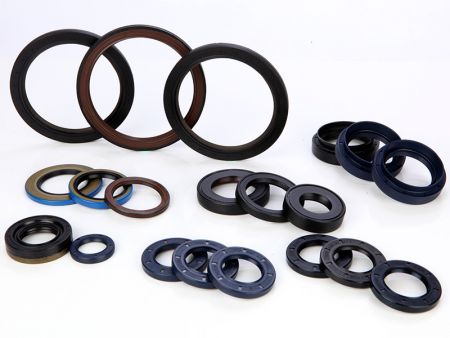
Transmission Seal
Transmission seals for the application level and vehicle types of automatic transmissions are increasing...
Details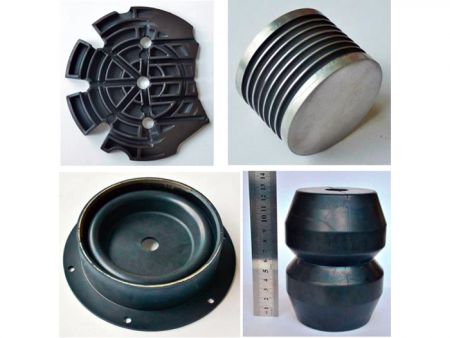
Waterproof Custom Rubber Parts
Custom Molded Waterproof rubber parts could be mold sheets or pads of custom formulated rubber...
Details