
Engineering Guide: Seal Technical Selection & Best Practices Q&A
Before Selecting Seals: NIYOK's 5 Most Frequently Asked Technical Questions for R&D Engineers
When you're designing a new product, sourcing a replacement for a discontinued seal, or facing demanding applications with extreme temperature, high pressure, or specialized media — seal selection often becomes the critical bottleneck in your development timeline.
NIYOK has worked with product designers and R&D engineers across numerous industries for decades. Here are the 5 core questions we're asked most frequently, designed to help you make the right call early in development.
Q1. What information helps NIYOK recommend the right seal faster?
The more complete your specifications, the shorter the selection cycle.
We typically need the following details to provide an accurate recommendation:
Application type: Static or dynamic seal? Rotating shaft? Reciprocating motion?
Contact media: Oil, gas, chemical solvent, food-grade fluid?
Temperature and pressure range: What are normal and peak operating conditions?
Dimensions and tolerances: ID, OD, cross-section width, and allowable fit tolerance
Drawings or 3D files: DXF, STEP, or hand sketches all work
NIYOK's website inquiry form already includes these fields. Completing it thoroughly can cut back-and-forth confirmation time significantly — we can typically provide preliminary selection recommendations within 1–2 business days.
Engineer's Tip
Even if your drawings aren't finalized, we welcome early contact. Preliminary discussions often help clarify your design direction and avoid costly revisions later.
Q2. Can NIYOK perform reverse engineering on old parts?
Yes. This is one of our core R&D capabilities.
NIYOK has reverse engineering and 3D printing capabilities. We can measure dimensions from physical samples, analyze materials, and reconstruct the corresponding manufacturing specifications.
This service is especially valuable in these scenarios:
NLA (No Longer Available) parts: Original manufacturer has discontinued production, no drawings available
Obsolete competitor components: Need to find rapid replacement solutions when supply chains are broken
Field wear parts replacement: Equipment aging, original supplier can no longer support
If you have an old part sample, send it directly to NIYOK. Our engineers will measure and evaluate it, then advise on feasibility and timeline for duplication.
Q3. What composite material seal structures can NIYOK produce?
NIYOK can process composite structures combining metal, fabric, PTFE/Teflon, and other materials.
Common composite combinations include:
Metal skeleton + rubber coating: High-pressure dynamic seals, heavy equipment
PTFE + fabric reinforcement layer: High-temperature, low-friction applications, food / pharmaceutical equipment
Teflon lip + metal spring: High-speed rotating shaft seals, chemical-resistant applications
Metal + PTFE composite ring: Structural support + sealing dual requirements
Composite structures are especially suited for:
High-wear applications: Simultaneous need for abrasion resistance and sealing performance
Structural reinforcement requirements: Conditions where pure rubber cannot withstand high pressure or impact
Custom interface design: Specialized cross-section geometry or multi-layer structures
If you have specialized material needs, please let us know. We can help evaluate feasibility.
Q4. What is the maximum seal size NIYOK can produce?
NIYOK can manufacture seals up to 580 × 600 mm.
This capability directly addresses applications like:
Large industrial equipment flange seals
Hydraulic cylinder seals for heavy machinery
Static seals for large-diameter pipe fittings or valves
Field replacement parts for aging equipment
If your design requires oversized seals, finding off-the-shelf inventory is typically impossible. NIYOK's custom manufacturing capacity solves this challenge directly — without requiring you to redesign equipment structures to fit standard component sizes.
Important Note
Development time and costs for oversized components differ from standard parts. We recommend confirming feasibility and lead time with us early in your design phase.
Q5. Is NIYOK developing seals for EV or semiconductor applications?
Yes. NIYOK is actively expanding into both directions.
We currently have relevant product development underway:
EV Charging Seals: Sealing solutions for electric vehicle charging interfaces, meeting demanding requirements for thermal cycling, waterproofing, and dust protection
Semiconductor Slit Valve Seals: Gate valve seals for semiconductor process equipment with strict requirements for cleanliness, chemical resistance, and low outgassing
Both sectors are still building application data and validation results. If you have needs in these areas, we recommend engaging early with our technical team. This allows us to provide current evaluation support for your project, while we work toward accelerating product maturity through real-world case studies.
Have other technical questions?
Every application is unique — the questions above are just the most common starting points. If you're facing material compatibility issues with specialized media, seal failure analysis under extreme temperature or pressure, time-critical prototype sampling needs, or seals that must meet specific certification requirements — please reach out directly to the NIYOK engineering team. We provide technical consultation with no minimum order requirement.
Contact the NIYOK engineering team directly. We provide technical consultation with no minimum order requirement.
- Related Products
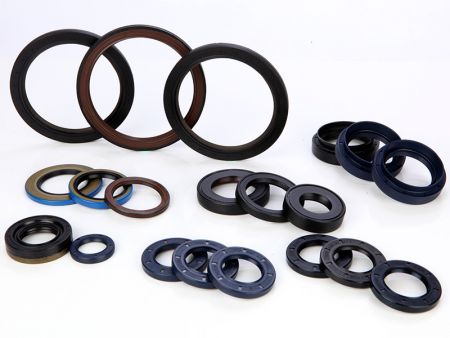
Transmission Seal
Transmission seals for the application level and vehicle types of automatic transmissions are increasing...
Details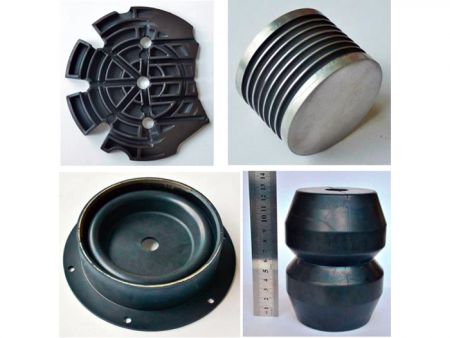
Waterproof Custom Rubber Parts
Custom Molded Waterproof rubber parts could be mold sheets or pads of custom formulated rubber...
Details